
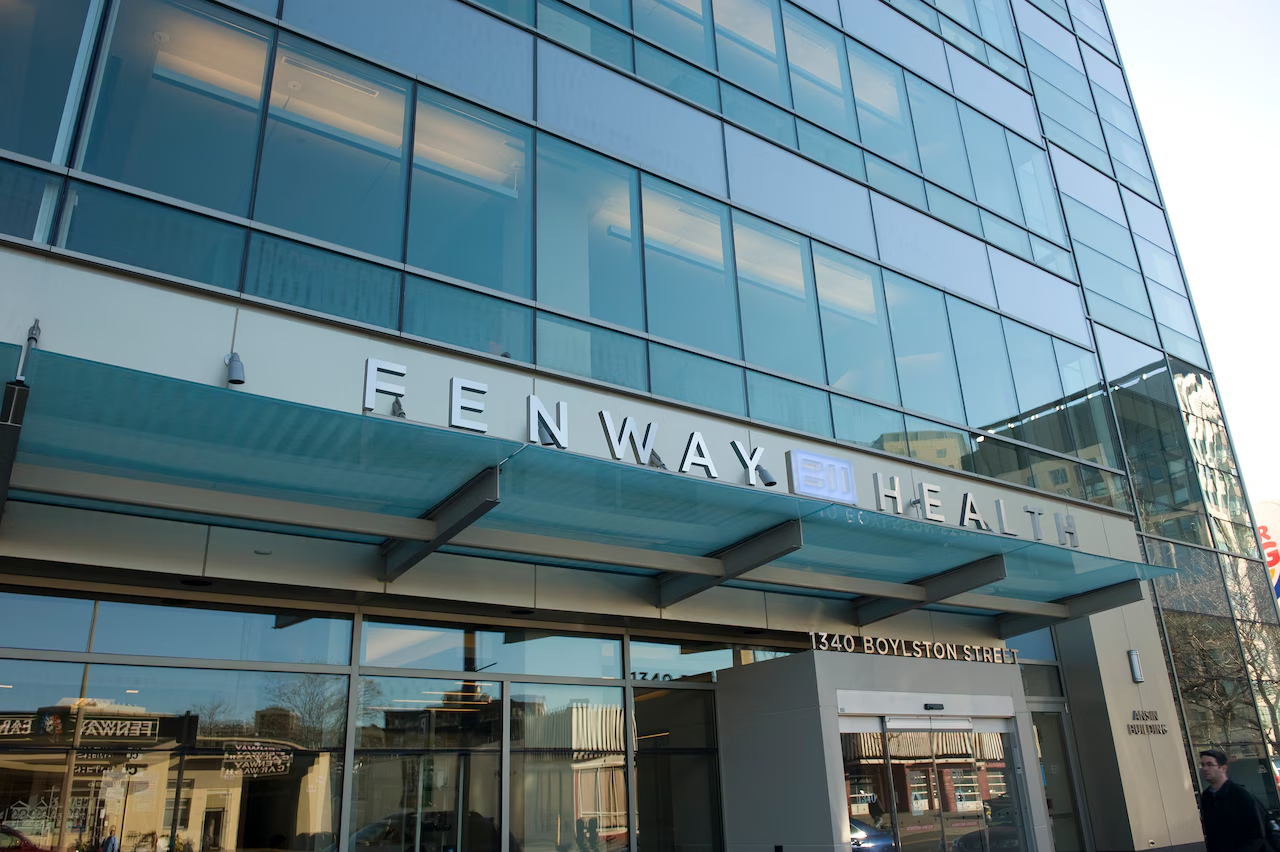
Carlene Pavlos speaks to the role of Community Health Centers and the importance of accurate, detailed data to address inequitable health outcomes for BIPOC and low-income people.
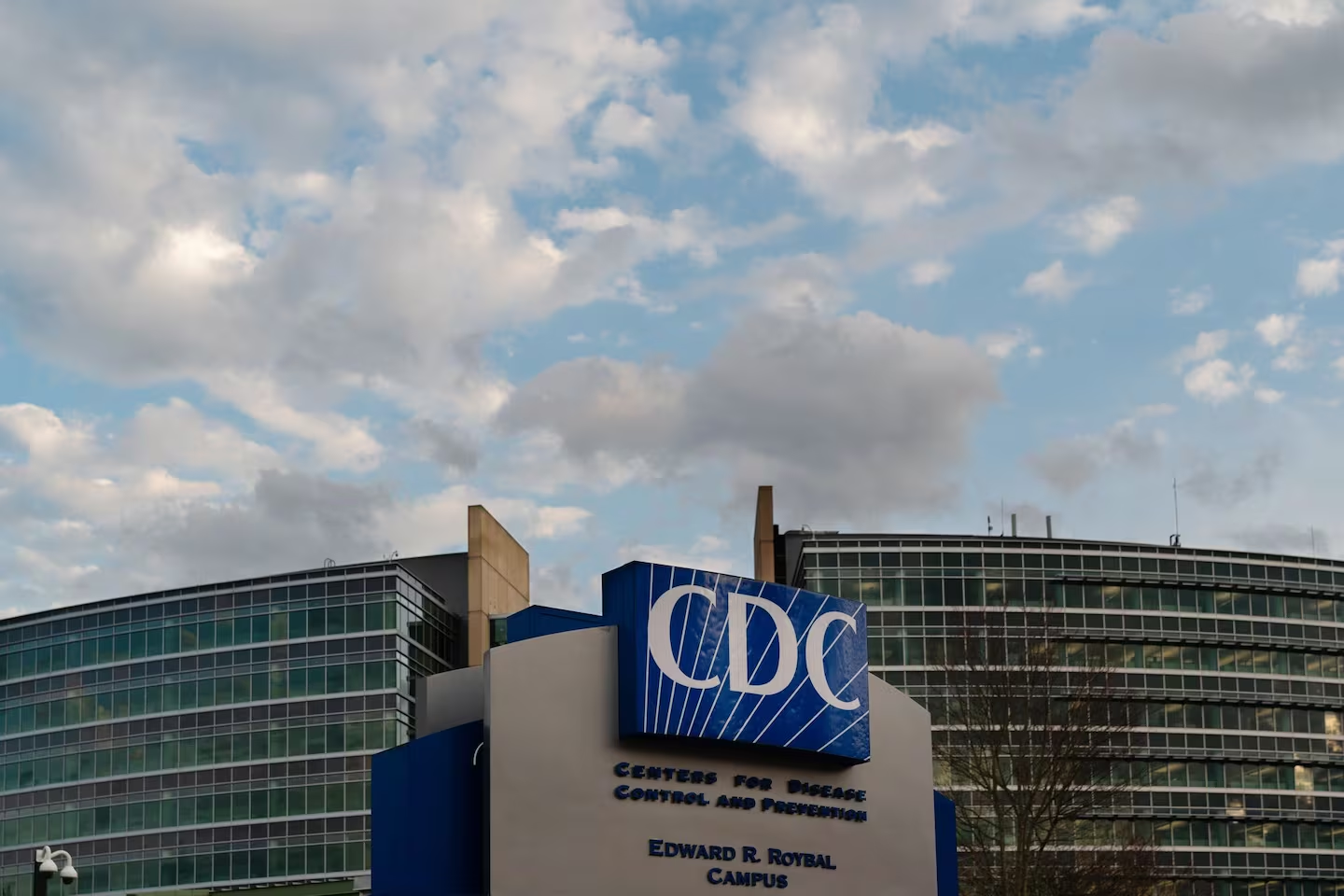
Carlene along with DPH Commissioner Robbie Goldstein, and colleague Nancy Kreiger, professor of epidemiology at the Harvard T.H. Chan School of Public Health address the federal gag order on sharing public health data, an act Carlene likened to book burning.
MPHA detailed what is at stake if the Trump administration is successful in freezing federal grants and loans to myriad organizations working on public health related issues.

BOSTON, MA – The Massachusetts Public Health Alliance opposes the nomination of Robert F. Kennedy, Jr. to be the Secretary of Health and Human Services and is urging senators to vote against his confirmation.
Mr. Kennedy’s well-documented history of spreading disinformation regarding vaccinations, HIV and AIDS, water fluoridation, and transgender health care demonstrates that he is unqualified to lead the U.S. Department of Health and Human Services. In each of these cases, not only do Mr. Kennedy’s assertions conflict with the recognized science, but they undermine successful public health interventions that have reduced illness, suffering, and deaths for decades.
On January 21, the Trump Administration instituted a sweeping gag order on all public communications from federal health agencies, including the Centers for Disease Control and Prevention, the Food and Drug Administration, and the National Institutes of Health. This dangerous new gag order is already impeding efforts to respond to emerging public health threats, like bird flu, and stalling critical medical research.
BOSTON, MA – Today, public health leaders from across the Commonwealth praised Governor Maura Healey for signing the Statewide Accelerated Public Health for Every Community (SAPHE 2.0) Act that was passed by the legislature as part of the Mass Leads Act. The landmark law will significantly strengthen the state’s local public health system and support consistent, equitable public health responses.

Massachusetts will mandate new performance standards and allocate resources for its 321 local public health departments to “improve a patchwork of local services responsible for ensuring restaurants are clean, pools are safe, and disease outbreaks are tracked and reported.” As Massachusetts Public Health Commissioner Robbie Goldstein, lead sponsor Senator Jo Comerford and MPHA Deputy Director Oami Amarasingham explain in this article, the goal of Statewide Accelerated Public Health for Every Community (SAPHE 2.0) Act is to increase quality as well as equity in every community.
BOSTON, MA – The Massachusetts Public Health Alliance (MPHA) celebrated a major victory for local public health in Massachusetts with today’s signing of the Statewide Accelerated Public Health for Every Community (SAPHE 2.0) Act by Governor Maura Healey. SAPHE 2.0 was passed by the legislature as part of the Economic Development Bond Bill. The landmark law will significantly strengthen the state’s local public health system and improve consistent and equitable public health responses across the Commonwealth.
MPHA’s advocacy to shore up Massachusetts’ local public health system long predates the COVID-19 pandemic and the current election cycle, but these two seismic events threw into sharp relief the urgent need for SAPHE 2.0 to help foster public health and equity.
“For too long our local public health workforce has been stretched to the breaking point, responding to a relentless stream of public health challenges—from devastating weather events fueled by climate change to the opioid crisis and the viral spread of health disinformation,” said Oami Amarasingham, Deputy Director of the Massachusetts Public Health Alliance.

MPHA Executive Director Carlene Pavlos and Deputy Director Oami Amarasingham co-signed a letter to the editor addressing President-Elect Trump’s plan to nominate the antithesis of public health to head the Health and Human Services Department. Pavlos and Amarasingham emphasized that, “regardless of who ultimately heads HHS, working in alliance—across communities, demographics, and sectors—is essential to meeting the public health challenges of today and tomorrow.”

Greenfield, MA—The Regional Transit Authorities Advocates Coalition (RTAAC) joined the Healey-Driscoll Administration’s event announcing the newest round of Fare Free Pilot Program grants open to the Commonwealth’s 15 Regional Transit Authorities (RTAs). These grants direct $30 million from the FY25 budget to support fare free RTA programs for the rest of the fiscal year that ends on June 30, 2025.
Today’s announcement of awardees for this year’s RTA Fare Free Pilot Program recognizes the need for affordable transportation in the over 250 communities that fall within an RTA service area in Massachusetts. When fares are eliminated in RTA service areas, ridership increases significantly, providing residents an affordable option to get to jobs, healthcare appointments, school, economic opportunities, and social engagements.
In addition to the Fare Free Grant Program, the Administration and Legislature have significantly increased operating funding for RTAs over the past two budget cycles. This has resulted in expanded bus routes, more frequent service, and night and weekend service. The increase in RTA funding is a real investment in public transportation across the Commonwealth. Taken together, this is a starting point of a strong commitment from state leaders to fund RTAs at a level where they can continue to expand service to meet the needs of communities statewide.
“Affordable public transportation is critical to help Massachusetts residents access resources and opportunities that help them lead healthy and thriving lives. By prioritizing free fares for RTA riders, and expanding service through significant investments over the last two budget cycles, the Administration and the Legislature have provided a lifeline to residents outside of the MBTA service area,” said Alexis Walls of The Massachusetts Public Health Alliance and one of the co-chairs of RTAAC.

Oami Amarasingham, Deputy Director, Massachusetts Public Health Association, and Craig Andrade, Associate Dean of Practice, Boston University of Public Health, co-signed a letter to the editor regarding recently released data from the MA Department of Public Health and a report from the Boston Public Health Commission calling for greater access to harm-reduction services and underscoring imperative to address structural racism for any policy approach to be both effective and equitable.
 Massachusetts Public Health Alliance
You must be logged in to post a comment.