
MPHA, alongside the American Academy of Pediatrics, the American Public Health Association, and other leading medical organizations, has filed legal action to stop the upcoming February 25–26 ACIP meeting and reverse recent changes to the pediatric immunization schedule. A hearing on the preliminary injunction is scheduled for Friday, February 13.
Coverage from major outlets include:

Following MPHA’s announcement that it would join a lawsuit challenging recent vaccine policy changes under HHS and Secretary Robert F. Kennedy, Jr., which continues to move forward in court after a motion to dismiss was denied, the organization received coverage from the outlets below:
Coverage from major outlets include:
Dramatic changes to the nation’s childhood vaccination schedule shouldn’t directly hinder access to shots in Massachusetts, public health experts said, thanks to the state’s efforts to build an inoculation policy independent from federal recommendations.
It is likely, though, that federal health authorities’ decision to reduce from 17 to 11 the number of immunizations recommended for all children will spread confusion and misinformation among parents, even in Massachusetts.
“There will still be quite a bit of, I would call it chaos,” said Carlene Pavlos, executive director of the Massachusetts Public Health Alliance.

A group of medical professional societies, led by the American Academy of Pediatrics (AAP), today argued in federal court that the changes to vaccine recommendations by the Advisory Committee on Immunization Practices (ACIP), and other actions by HHS Secretary Robert F. Kennedy, Jr. violate the Administrative Procedure Act (APA) and the Federal Advisory Committee Act (FACA).
Today’s hearing in the U.S. District Court for the District of Massachusetts, in Boston, focused on the government’s motion to dismiss in AAP et al., v. Kennedy et al., and whether the plaintiffs have standing to bring suit. Plaintiffs alleged ongoing and continuous harms resulting from the Secretarial Directive and an improperly appointed ACIP.
Based on his line of questioning, U.S. District Court Judge Brian Murphy showed interest in a range of issues from the nature of ACIP recommendations, coverage and payment for ACIP-recommended vaccines, to the types of harms providers could experience. A decision on the government’s motion to dismiss is expected the first week of January.
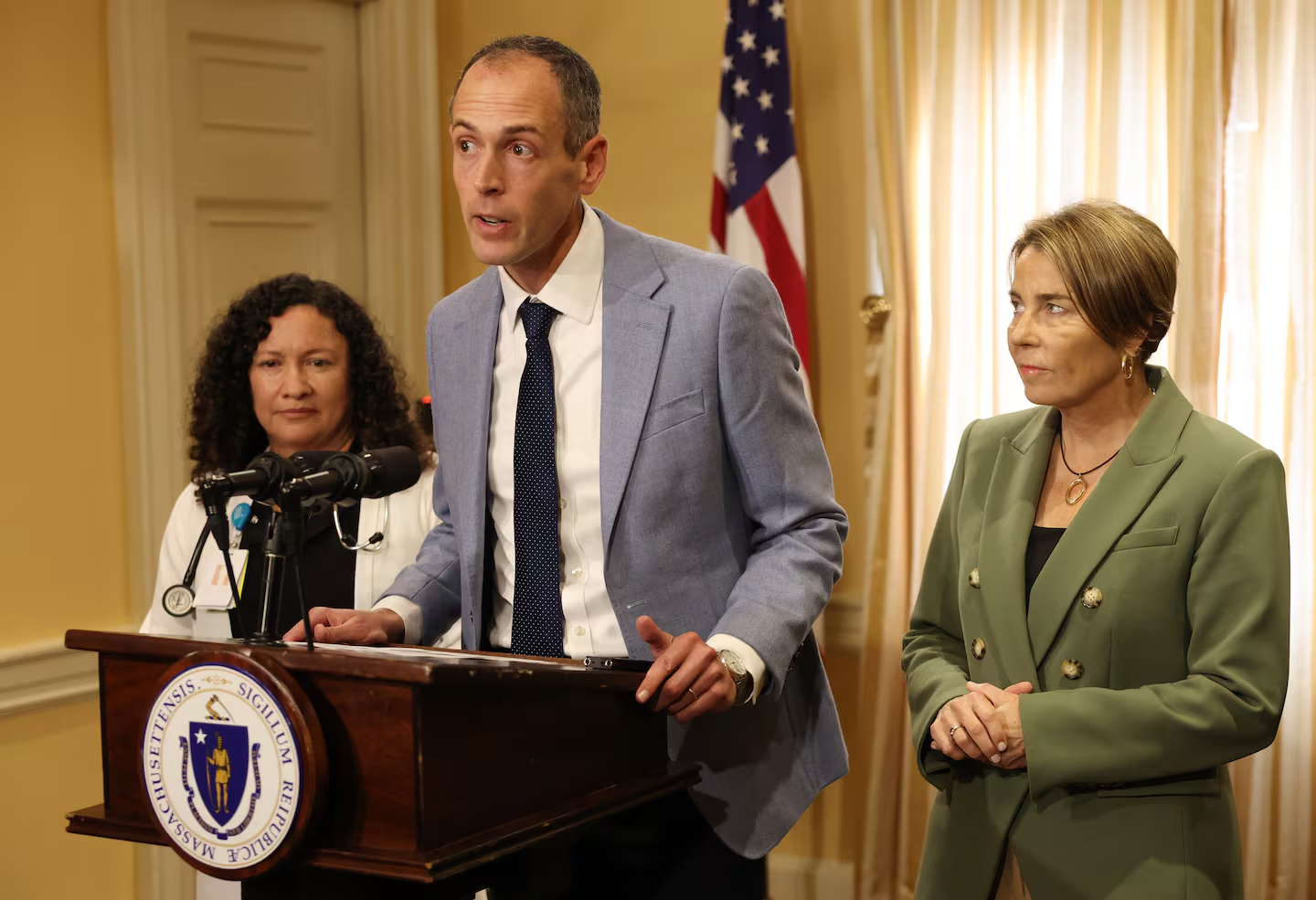
Since Donald Trump’s election, Massachusetts’ public health director, Dr. Robbie Goldstein, has been preparing for a situation that once seemed unimaginable: a presidential administration limits access to life-saving vaccines for millions of Americans.
Goldstein’s worst case scenario is now a possibility, he said. On Thursday, an influential vaccine advisory panel could end a 34-year national consensus on the importance of vaccinating newborns against the liver infection hepatitis B.
If the panel, which advises the Centers for Disease Control and Prevention, reverses the recommendation that all infants be immunized at birth, it would be the most significant policy change yet under Health Secretary Robert F. Kennedy Jr.’s leadership, undoing an inoculation strategy credited with virtually eliminating cases of the illness among infants
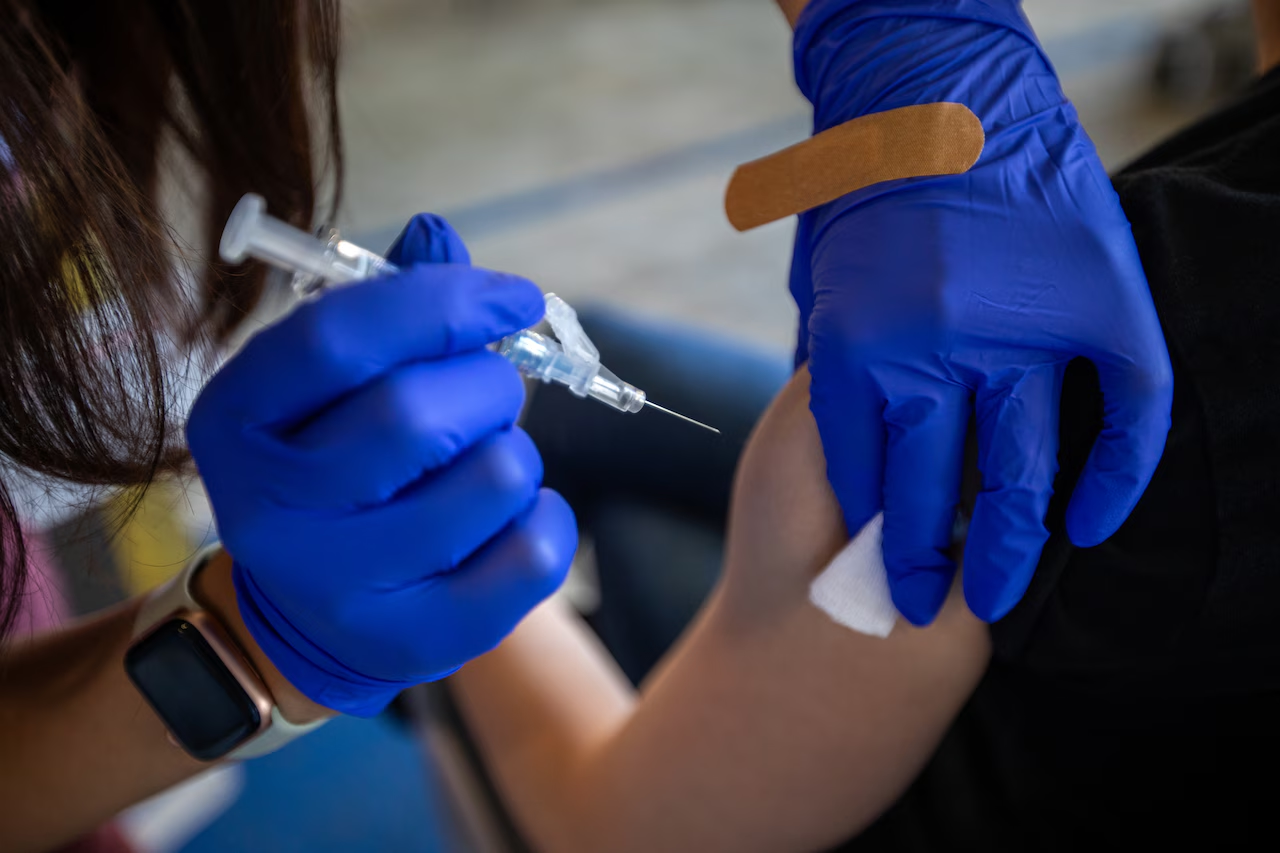
Carlene Pavlos speaks on the state’s efforts to increase access to vaccinations and to encourage people to get vaccinated, and what it’s like to work in public health when the nation’s top public health official is a vaccine skeptic.

Following MPHA’s Public Health Excellence Day at the State House on October 23rd, Deputy Director Oami Amarasingham was featured on WMBR Local News in an interview with Linda Pinkow, broadcast on October 27, 2025. The conversation highlighted the Public Health Excellence Grant Program and the SAPHE 2.0 law, reflecting on five years of progress and lessons learned while outlining the next steps for strengthening local public health in Massachusetts.
The interview focused particularly on grants awarded to Greater Boston communities, emphasizing how state investment is transforming local public health infrastructure and improving community health outcomes across the region.

BOSTON – A broad coalition of public health, consumer, municipal, environmental and community organizations along with academics, scientists and firefighters urged lawmakers to protect our drinking water and our health from toxic chemicals at a State House hearing today.
Testifying before the legislature’s Joint Committee on Public Health, the advocates and members of the public urged the committee to act quickly to pass the Act to protect Massachusetts public health from PFAS (H2450 & S1504) filed by state Sen. Julian Cyr (Provincetown) and state Rep. Kate Hogan (Stow). The bill would phase out per- and polyfluoroalkyl substances (PFAS) in many products, cut industrial discharges of PFAS; and set up a fund to help communities test and treat PFAS in drinking water, soil, and groundwater.
PFAS are a class of man-made chemicals that are used in many consumer products and industrial applications. They are toxic even at very low level exposure. PFAS increase the risk of developing cancers, immunosuppression, liver disease, and developmental and reproductive illnesses.

Boston — Governor Maura Healey today announced a series of immediate measures to ensure that vaccines remain available to Massachusetts residents of all ages, while President Donald Trump and Health and Human Services Secretary Robert F. Kennedy Jr. restrict access to vaccines and make cuts to public health across the country.
“Massachusetts has the best health care in the world,” said Governor Healey. “We won’t let Donald Trump and Robert Kennedy get between patients and their doctors. When the federal government fails to protect public health, Massachusetts will step up. The actions we are announcing today will make sure people can continue to get the vaccines they need and want in Massachusetts.”
Today, the Governor announced three steps to protect vaccine access in Massachusetts.
First, at Governor Healey’s direction, the Division of Insurance (DOI) and Department of Public Health (DPH) issued a bulletin that requires insurance carriers in Massachusetts to continue to cover vaccines recommended by DPH and not rely solely on CDC recommendations. Massachusetts is the first state in the nation to guarantee insurance coverage of vaccines recommended by the state. Blue Cross Blue Shield of Massachusetts and the Massachusetts Association of Health Plans all support this action. This will ensure that Massachusetts residents can afford the vaccines they need and want to keep themselves and others healthy, even if the federal government issues narrower recommendations. These include respiratory virus vaccines, like COVID, flu and RSV, and routine vaccines for children, like measles, chickenpox, and Hepatitis B. This action follows legislation filed by Governor Healey last month that would give DPH authority to set independent standards for vaccine purchasing and recommendations.
…
Statements of Support:
Carlene Pavlos, Executive Director, Massachusetts Public Health Alliance:
“The Massachusetts Public Health Alliance is grateful that the commissioner of public health, the governor, and the legislature are taking seriously their responsibility to protect and promote the health and safety of people in Massachusetts. Existing and anticipated federal changes are undermining vaccine access nationwide and posing a genuine threat to the health of Massachusetts residents. The Healey-Driscoll administration’s decision to stand up for science-based public health today will help to mitigate these threats and should serve as a model for other states and regions of the country.”
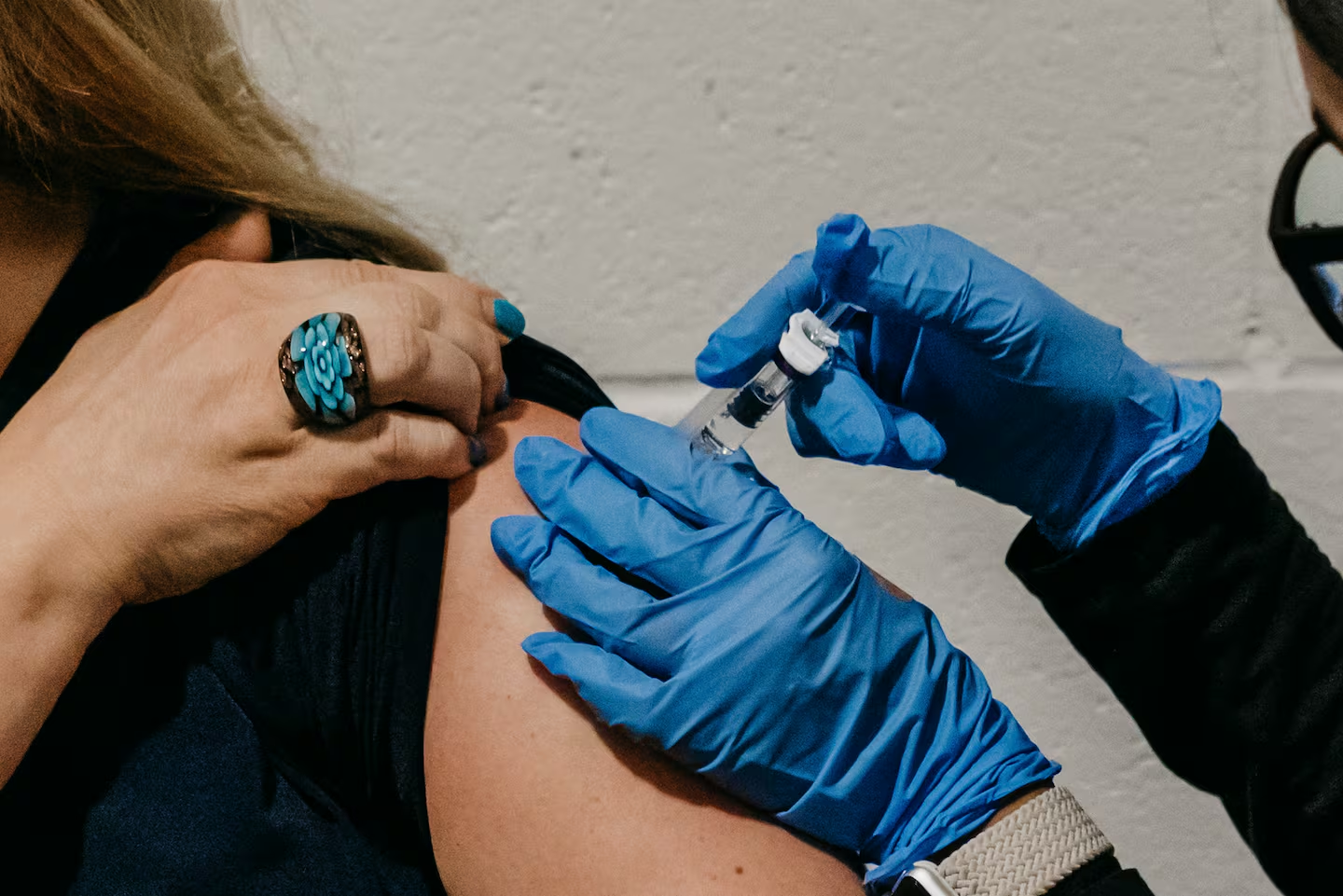
Disruptions to national vaccine recommendations under Health Secretary Robert F. Kennedy Jr. are starting to reverberate across Massachusetts, threatening the state’s access to COVID shots just as the annual season for respiratory viruses — and vaccines to protect against them — approaches. Carlene along with DPH Commission Goldstein and Laura Kittross, public health program manager for the Berkshire Regional Planning Commission, address what these disruptions mean for the Commonwealth as well as our neighboring states.
 Massachusetts Public Health Alliance
You must be logged in to post a comment.