

In this issue:

BOSTON — Governor Maura Healey today announced $17.9 million in grants to 31 community organizations, cities, towns and regional planning commissions to improve health and help people live healthier lives across Massachusetts.
The funding will support locally driven efforts focused on issues including access to healthy food and housing, behavioral health, healthy aging and other factors that have a direct impact on the health and well-being of residents.
“Where you live, whether you can afford healthy food and housing, and whether you can get the support you need all have an impact on your health,” said Governor Maura Healey. “These investments put resources directly into communities to tackle those challenges and help people live healthier lives. We’re proud to support local organizations that know their communities best and are doing this work every day.”
“Some of the best ideas for improving people’s health come directly from the communities we serve,” said Lieutenant Governor Kim Driscoll. “These grants give local leaders and organizations the resources to turn those ideas into action — from making healthy food and housing more accessible to helping older adults stay healthy and independent in their communities.”
This represents the fourth round of funding awarded through the Massachusetts Community Health and Healthy Aging Funds (The Funds). The grants will be distributed over three to five years among the 31 awardees. Since its launch in 2020, The Funds has invested $63 million in community health initiatives statewide through 113 organizations and communities. These initiatives support locally driven efforts to create healthier communities and expand opportunities for people of all ages to live healthy lives.

In this issue:

In this issue:

Vaccine hesitancy and politics continue. Years of loud skepticism and outright campaigns against vaccination seem to have taken their toll; a decrease in vaccine use has resulted in a resurgence of measles and other public health threats. Yet the government, which has a responsibility for public health, persists in making vaccine recommendations that are not backed by science while public health officials, health organizations, researchers and other experts press on to protect the health of this country and provide evidence-based information.
I recently read an op ed article that acknowledged the beginning of vaccination in Boston in 1721. An African slave shared knowledge of a century-old African practice known as variolation —a form of inoculation that could protect against smallpox. This was shared with a physician who put it into practice. The success and lives saved were carefully documented. This was the earliest evidence in North America that vaccines save lives.
Fifty years later George Washington, noticing that more of his troops were dying from disease than enemy fire, facing great opposition and ordered inoculation of his troops. This contributed to the American government’s responsibility to protect public health. Seventy-five years later, a report on the necessity and power of research paved the foundation for evidence-based public health practice in the US. Public Health has grown as a strong, protective and layered service to the American public.
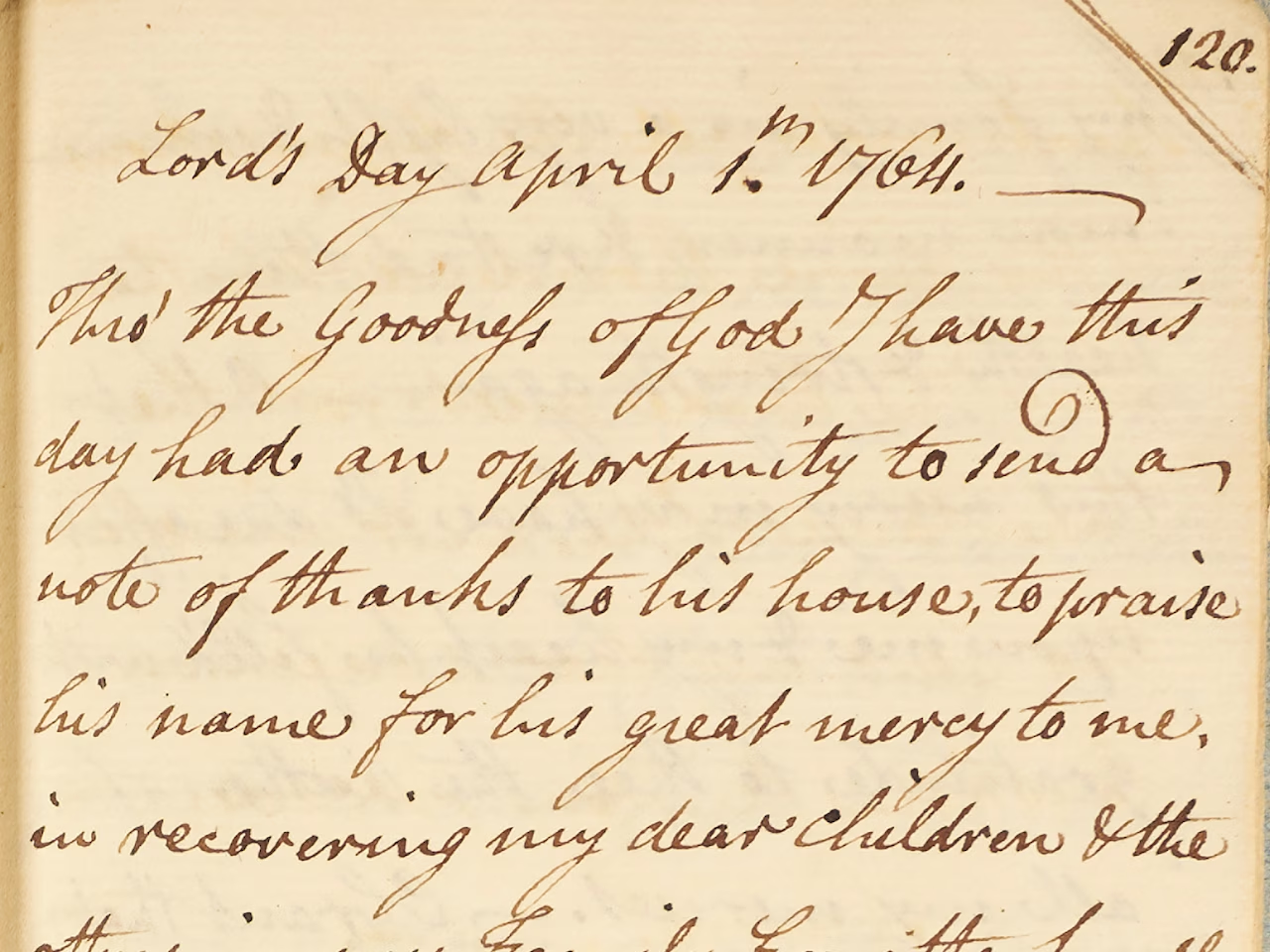
More than 300 years ago, during Boston’s 1721 smallpox epidemic, Onesimus, an African man enslaved by the Puritan minister Cotton Mather, shared knowledge of a centuries-old African practice known as variolation — a form of inoculation that could protect against smallpox.
That knowledge, passed from Onesimus to Mather and then to physician Zabdiel Boylston, was put into practice despite fierce public opposition. Boylston’s careful documentation showed that inoculation dramatically reduced deaths, providing some of the earliest evidence in North America that prevention could save lives.
Fifty years later, during the Revolutionary War, as smallpox threatened the Continental Army, General George Washington, the future president, made what was then an equally controversial decision: He ordered the inoculation of his troops. His decision helped preserve the army’s fighting strength at a pivotal moment in the war.

In this issue:

In this issue:

In this issue:

Following our lawsuit, AAP et. al. v Kennedy et. al., a federal judge issued an important ruling in our lawsuit against Secretary Robert F. Kennedy and the federal administration’s dangerous changes to vaccine policy.
Coverage from major outlets include:
 Massachusetts Public Health Alliance
You must be logged in to post a comment.